
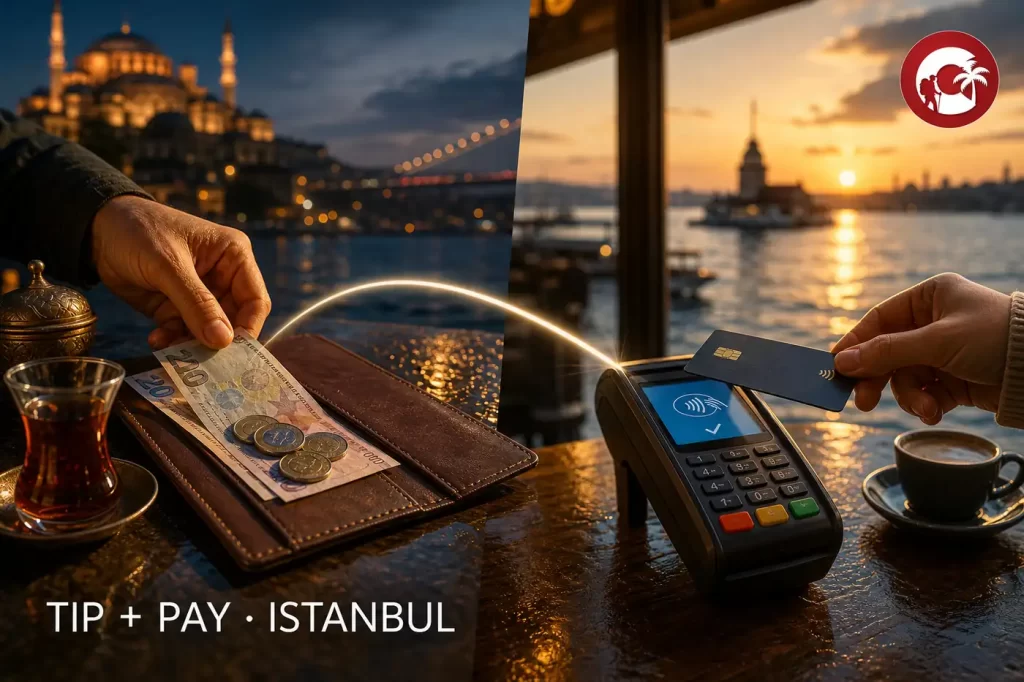
Istanbul tipping guide for restaurants, taxis, hotels & cafés: cash vs cards, realistic tip %, and when fixed-price tours already include service.
Istanbul tipping guide habits that keep bills calm: carry some Turkish lira, pay cards where terminals work, and tip as courtesy rather than as a fixed tax. At Colina Rojo Travel (TÜRSAB licensed), we brief guests on the same seven service norms every week: restaurants, cafés, taxis, hotels, guides, delivery, and prepaid private bookings. This page gives easy cash-and-card checks, realistic tip ranges, and a clear note that many fixed-price private tours and airport transfers already include service, so you are not guessing at every counter.
Contents
- How tipping works in Istanbul
- Cash vs cards: what to carry
- Tip percentages by service
- Restaurants, cafés, and service charges
- Taxis, apps, and airport transfers
- Hotels, guides, and delivery
- Easy 7 norms to remember
- Common questions

istanbul tipping guide basics that travellers actually need on day one: some Turkish lira in your pocket, a working card for hotels and many restaurants, and a calm sense of when a tip is expected versus optional. Colina Rojo Travel is a TÜRSAB licensed Istanbul operator. Our team hears the same payment questions every week at cafés, hotel desks, taxi ranks, and tour meet points, so this page is field advice, not theory. Use it to settle bills without awkward pauses, keep small cash ready for places that still prefer notes, and understand when a prepaid private booking already covers service.
Türkiye does not run a single legal tip rate for visitors. Tipping is social custom. That is the core of any honest istanbul tipping guide: you tip to say thank you for good service, not because a statute forces a percentage. Locals tip in a lighter, more flexible way than North American “must leave 20%” culture. Over-tipping is polite but unnecessary. Under-tipping is rarely a confrontation. Clear cash and card habits matter more than memorising fake rules.
How tipping works in Istanbul
Start with three facts. First, the currency is Turkish lira (TRY). Second, cards are common in central districts, malls, hotels, and mid-to-upscale restaurants. Third, cash still wins for many taxis, market stalls, bakery counters, street snacks, and small neighbourhood spots.
Service staff in tourist areas see foreign guests daily. A small tip or a rounded-up fare is understood. Nobody expects US-style automatic percentages on every coffee. If a bill already shows a service line, do not stack another large tip on top without checking. Read the receipt. Ask “servis dahil mi?” if the line is unclear. That one question prevents most double-tipping mistakes.
Private products booked at a fixed prepaid price often treat driver and guide service as part of the package. Guests still sometimes leave a little extra for exceptional help with luggage, language, or timing. That extra is optional. It is not a second invoice. Soft planning tip: pair payment habits with seasonal crowd planning from our best time to visit Istanbul guide, and keep modest dress cash-friendly for mosque stops covered in Istanbul mosque etiquette.
Cash vs cards: what to carry
Carry both. Cards cover big spends. Cash covers friction points.
Cards: Visa and Mastercard work widely in Sultanahmet, Taksim, Beşiktaş, Kadıköy, airports, and chain cafés. Contactless is normal. Some smaller venues set a minimum spend for cards or prefer cash after late hours. Notify your bank before travel so fraud filters do not block legitimate charges.
Cash: Withdraw Turkish lira from bank ATMs when possible. Airport exchange desks are convenient but often weaker on rate. Keep smaller notes for taxis, bakers, tips, and ferry snacks. Large notes can slow a street transaction when the seller lacks change.
Foreign currency: Some tourist-facing sellers accept euros or dollars, usually at a soft rate that favours them. Paying in lira is cleaner. For destination context beyond payments, Türkiye’s official travel portal GoTürkiye is a solid outbound reference.
Practical daily kit for an istanbul tipping guide routine: one card primary, one backup card separate from your phone, and enough lira for two days of taxis, tips, and small food stops if terminals fail.

Tip percentages by service
Use this table as a visitor range, not a law. Adjust for service quality, group size, and whether a service charge already appears.
| Service | Common tip range | Cash or card? | Notes |
|---|---|---|---|
| Sit-down restaurant | 5–10% if no service charge | Card OK; cash tip easier | Check bill for “servis” |
| Café / quick coffee | Round up or leave small coins | Card for drink; cash for tip | No need for large % |
| Taxi / meter ride | Round up to a convenient amount | Cash preferred by many drivers | Confirm meter or app fare first |
| Hotel porter | Small per bag or per trip | Cash | Hand privately at drop-off |
| Housekeeping | Small daily amount optional | Cash | Leave clearly marked in room |
| Tour guide (shared) | Modest amount per person if happy | Cash | Optional; group norms vary |
| Private guide / driver day | Optional thank-you if outstanding | Cash | Fixed prepaid price often includes service |
| Food delivery | Small tip optional | App tip or cash | Not mandatory |
| Hammam attendant | Around 10% of package if pleased | Cash | Ask desk if tip is pooled |
That comparison is the heart of this istanbul tipping guide for first-timers: restaurants and hammams sit near percentage thinking; taxis and cafés sit near rounding; private prepaid transport and tours sit near “already covered unless you want to add thanks.”

Restaurants, cafés, and service charges
At sit-down restaurants, look at the bill before you tip. If service is included, a little leftover change or a small top-up for excellent staff is enough. If service is not included, 5–10% is a common visitor range for solid service. Fine dining rooms in hotel districts may sit toward the higher end when the experience is strong.
Cafés and tea gardens are lighter. Rounding up a tea or leaving coins on the saucer is normal. Do not treat every simit stand like a tipped table service. Counter takeaway with no seating rarely needs a tip.
Split bills: many places prefer one payment. Cards can handle the full amount; settle tip cash if the terminal cannot add a tip line. Ask before assuming the POS has a tip field. Nightlife spots and busy weekend kitchens sometimes run slower on change, so keep small notes ready.
Ramadan evenings and peak tourist hours stretch staff. Patience is part of good manners. A calm tip after a hard service shift means more than an argument over a few lira.
Taxis, apps, and airport transfers
Street taxis: insist on the meter for city rides, or agree a clear fare before moving if the driver proposes a fixed price for a known route. Round up the final amount when service was fine. Exact change is appreciated but not always available, so small notes help.
App-based rides often handle payment in the app. An in-app tip or small cash thank-you is optional. For airport days, prepaid private transfers remove meter stress. Our published central routes start from €45 IST and €65 SAW on fixed-price products. Details live on the Istanbul transfer hub and the Istanbul Airport to Sultanahmet transfer page.
On fixed-price private transfers, meet-and-greet, waiting policy, and driver service are built into the booking. Extra tipping is optional for exceptional help with multiple bags, child seats, or late-night patience. It is not required to “complete” the fare.

Hotels, guides, and delivery
Hotels: Porters often receive a small cash tip per luggage run. Housekeeping tips are optional; leave them daily in an obvious spot if you choose to tip. Concierge help with hard reservations sometimes earns a thank-you; simple directions do not require cash.
Guides: On shared walking groups, a modest per-person tip is common when the guide was clear, paced well, and handled mosque or museum flow without rushing you. On private days, read your booking notes. Many private Istanbul products price guide time and vehicle as an inclusive fixed rate. Guests who still want to tip usually do so at the end of the day for standout service, not as a mandatory surcharge.
If you are building a half-day Old City plan, our private Istanbul morning tour and the Spanish-language Istanbul morning tour pages show how licensed guiding is packaged. Use those for product details; use this page for tip manners around them.
Delivery and errands: App food delivery may offer an in-app tip. A small cash amount is fine when weather is rough or the building is hard to find. Market bag carriers in tourist bazaars may expect a negotiated amount before they lift anything; agree first.
Spas and hammams: When an attendant delivers the scrub and wash personally, around 10% of the package is a common thank-you if you were happy. Confirm with reception whether tips are shared or given directly.
Easy 7 norms to remember
Memorise these seven. They cover almost every payment moment visitors ask us about.
- Carry Turkish lira for taxis, tips, and small vendors.
- Use cards freely in hotels, malls, and card-ready restaurants.
- Read the bill for service charges before adding a percentage.
- Round up taxi fares; do not invent a large mandatory tip.
- Keep restaurant tips near 5–10% when service is not included.
- Treat prepaid private tours and transfers as service-included unless you choose a thank-you extra.
- Tip for good service, never as a bribe for special treatment at security, mosques, or ticket gates.
Those seven lines are the short version of this istanbul tipping guide. Print them mentally. Your first café, first taxi, and first hotel lobby will feel simpler.
One more operator note: tip in local currency when you can. Foreign notes create change problems and soft conversion. If you only have a large note, ask staff if they can break it at the register before you commit the tip.

Common questions
Is tipping mandatory in Istanbul?
No. It is customary courtesy for good service, not a legal requirement. Locals tip flexibly.
What is a normal restaurant tip?
When service is not already on the bill, many visitors leave about 5–10% for solid table service. Check for a service charge first.
Do I need cash if I have a credit card?
Yes, some. Cards cover a lot, but taxis, tips, markets, and small counters still lean on lira.
Should I tip my private transfer driver?
Optional. Fixed prepaid transfers usually include service. A small thank-you for exceptional help is welcome, not required.
Can I tip on the card machine?
Sometimes. Many terminals charge the bill only. Cash tips remain the simplest method.
How much should I tip a tour guide?
On shared tours, a modest per-person amount is common if you were happy. On private fixed-price days, tipping is optional appreciation, not a second fare.
Are US dollars or euros OK for tips?
Lira is cleaner. Foreign notes may be accepted at a weak rate or refused when change is awkward.
Does this istanbul tipping guide change during holidays?
Custom stays similar. Peak nights and Ramadan evenings only increase the value of patience and small notes for faster change.
Keep cash light, cards ready, and percentages modest. That is the practical close of this istanbul tipping guide from Colina Rojo Travel: clear norms for restaurants, taxis, hotels, guides, and delivery, with prepaid private service already built into many fixed bookings when you plan through a licensed operator.